


Special Exhibit:
First F&M Proportional
(Click on any of the images on this page to see a larger version)
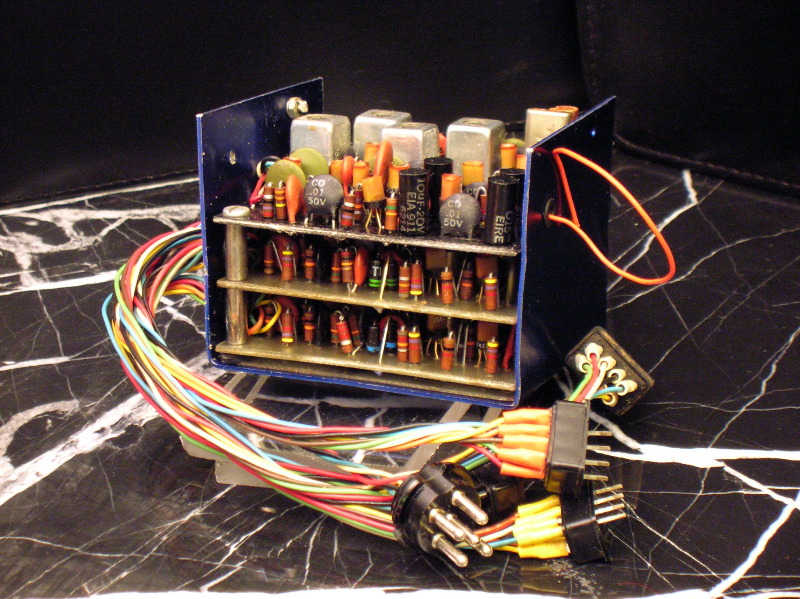
This is the first F&M proportional receiver to fly. This one-of-a-kind receiver was strictly for test and research purposes.
It was deliberately overbuilt in a “no expense spared” effort to produce an initial receiver most likely to work, and then worry about reducing size, weight and cost later. We estimate this receiver was flying in early to mid 1963, well before production models of F&M, Digicon, Digimite or other digital systems. In mid-1963 F&M announced that its proportional system would be available in late 1963 and that its receiver would have 3 decks (Nov 63, MAN: N/D 63 AM). However, the first advertisement for F&M’s proportional did not appear until June/July 1964 and by then the production receivers were down to 2 decks.
In addition to having three decks this receiver was substantially larger than production models. It measures 2 7/8 x 2 ¼ x 2 3/16 versus 3 x 2 x 1 5/8 on the first production models. It weighs 7.6 ounces (vs. 5.3) and is only 4 channels instead of 5.
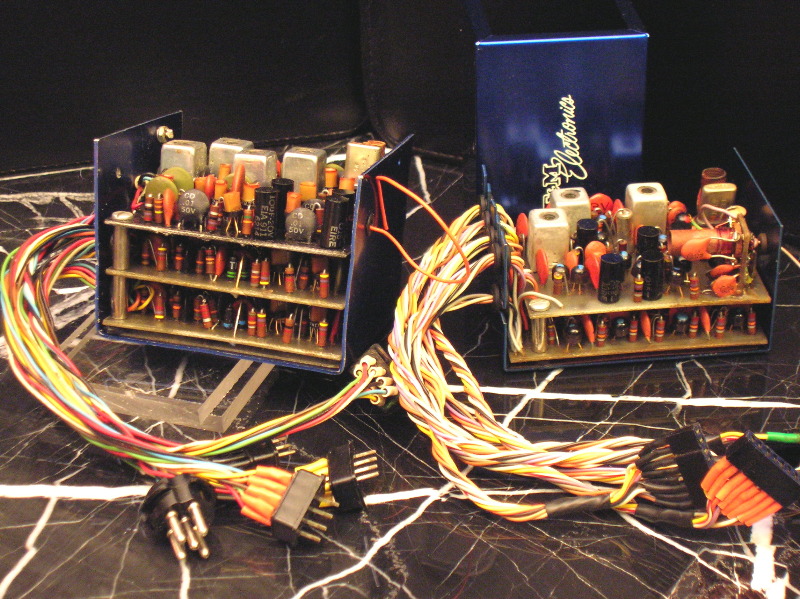
The particular production model shown above is also very special since it was part of the first production run. All of the earliest receivers shipped with open gimbal transmitters had no RF amplifier on the main board. Note the small board installed perpendicular to the upper deck. However, this receiver has a second feature which is seen only on those from the first production run. Each of the servo lead wire groups consists of 8 wires not 7 like those with later open gimbal transmitters and all Bonner stick transmitters. The eighth wire was for fail safe control. For a brief period models were made with a fail-safe option before this was completely dropped.
